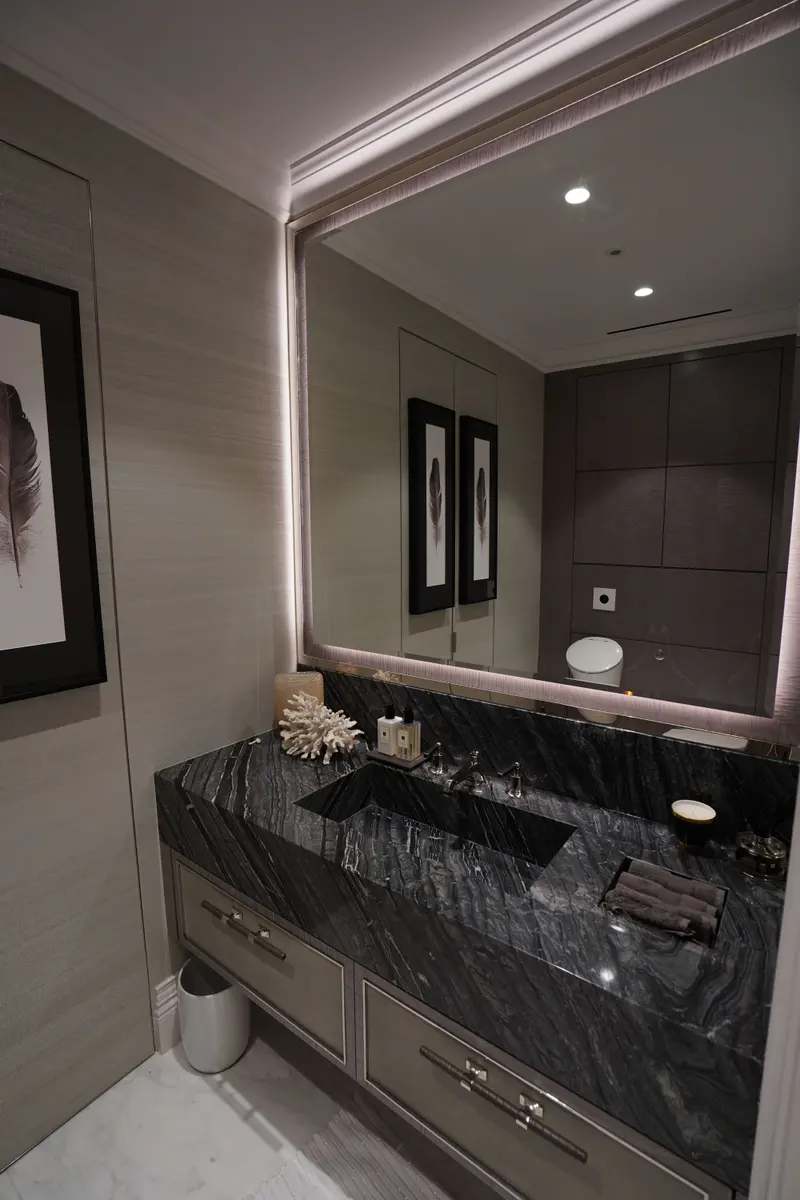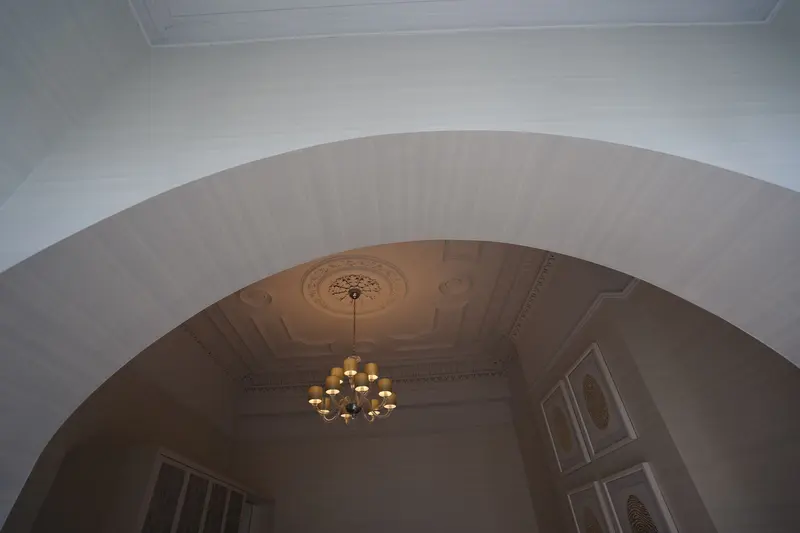
How do you get a clean wallcovering edge on an arch that is not true? You stop asking the paper to make the edge. We surveyed the arch, ordered a specialist external-corner profile made for wallcoverings, bent it to the curve, fixed it, and scribed the paper into the trim’s return. The arch now reads as one crisp, even line, and its most exposed edge is protected rather than left bare.
At a glance
- Where: a prime residence in central London
- The detail: the curved external edge of a wallcovered arch
- The difficulty: an arch, and an arch edge, that were not true
- The method: survey, a specialist external-corner profile ordered for the job, bent to the arch, fixed, and the paper scribed into its return
- Photographed: May 2019
- Our role: wallcovering installation and the edge detail
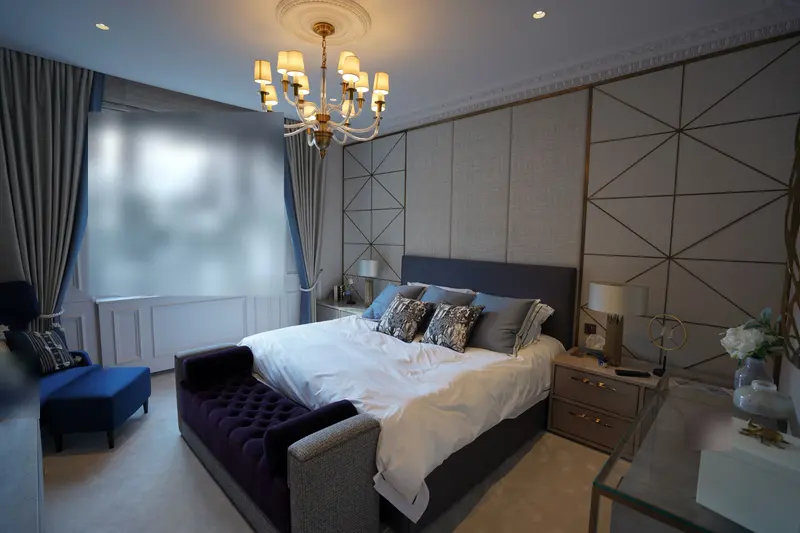
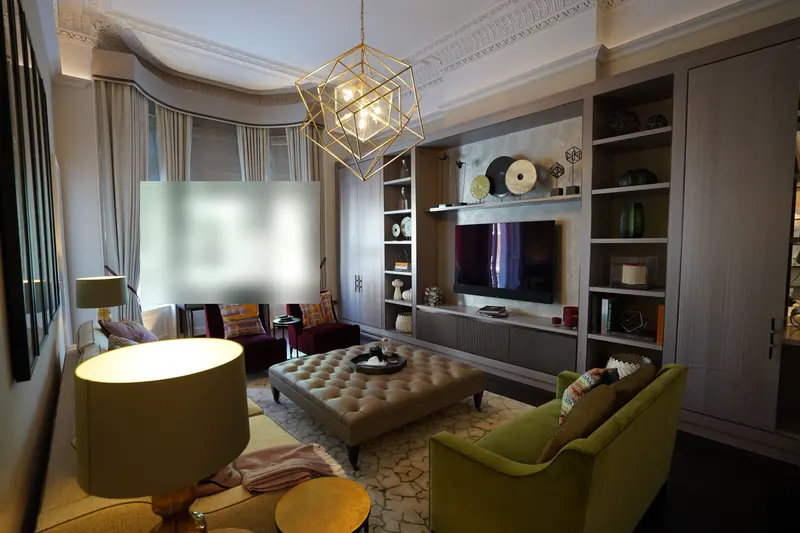
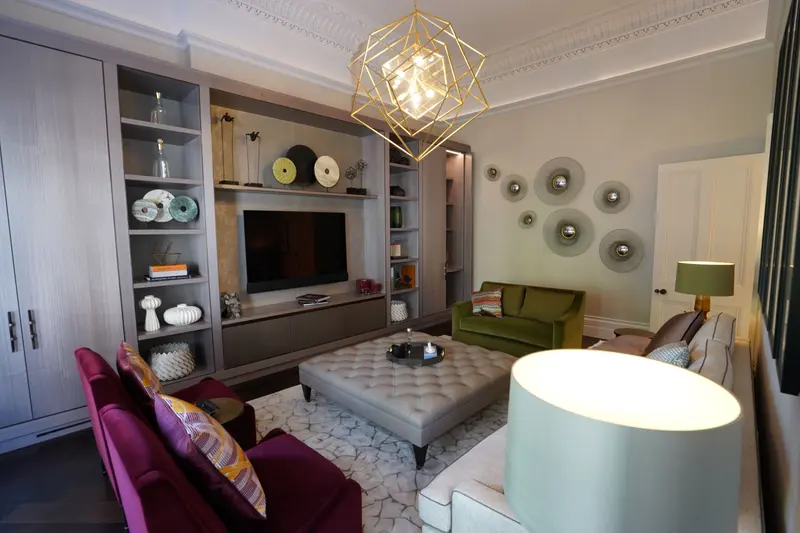
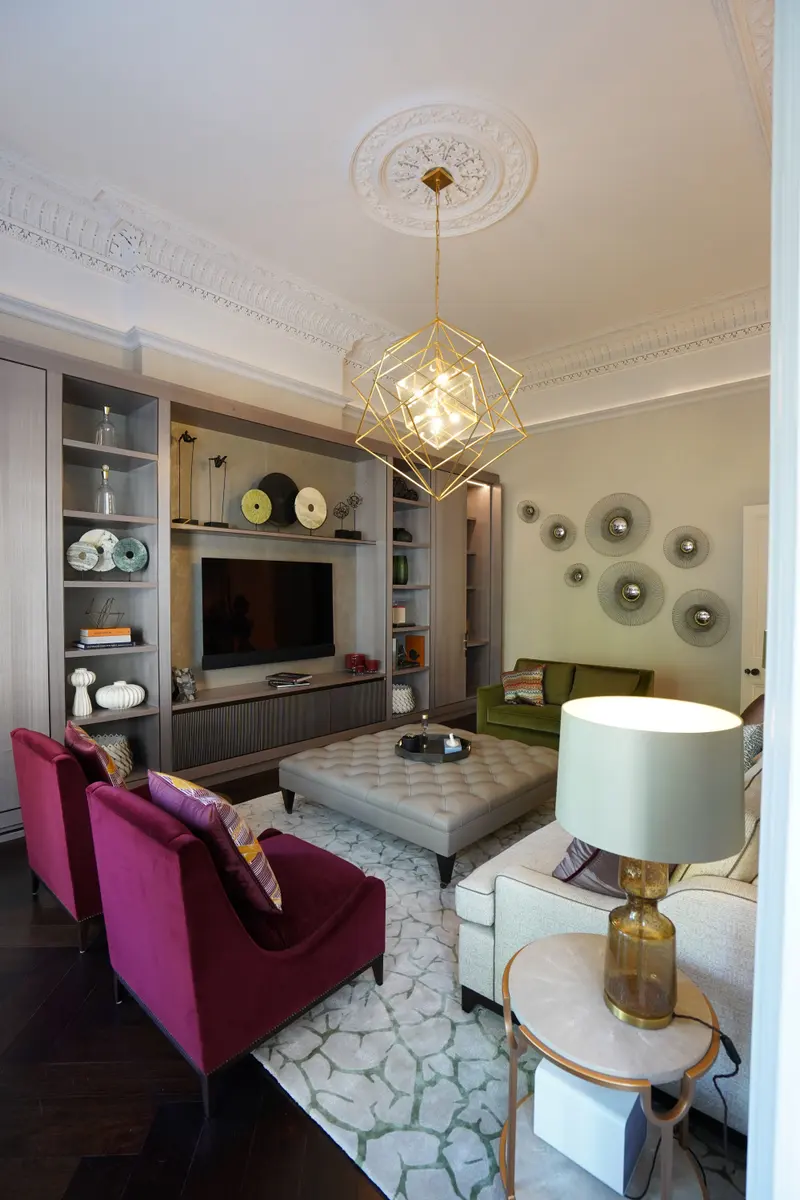
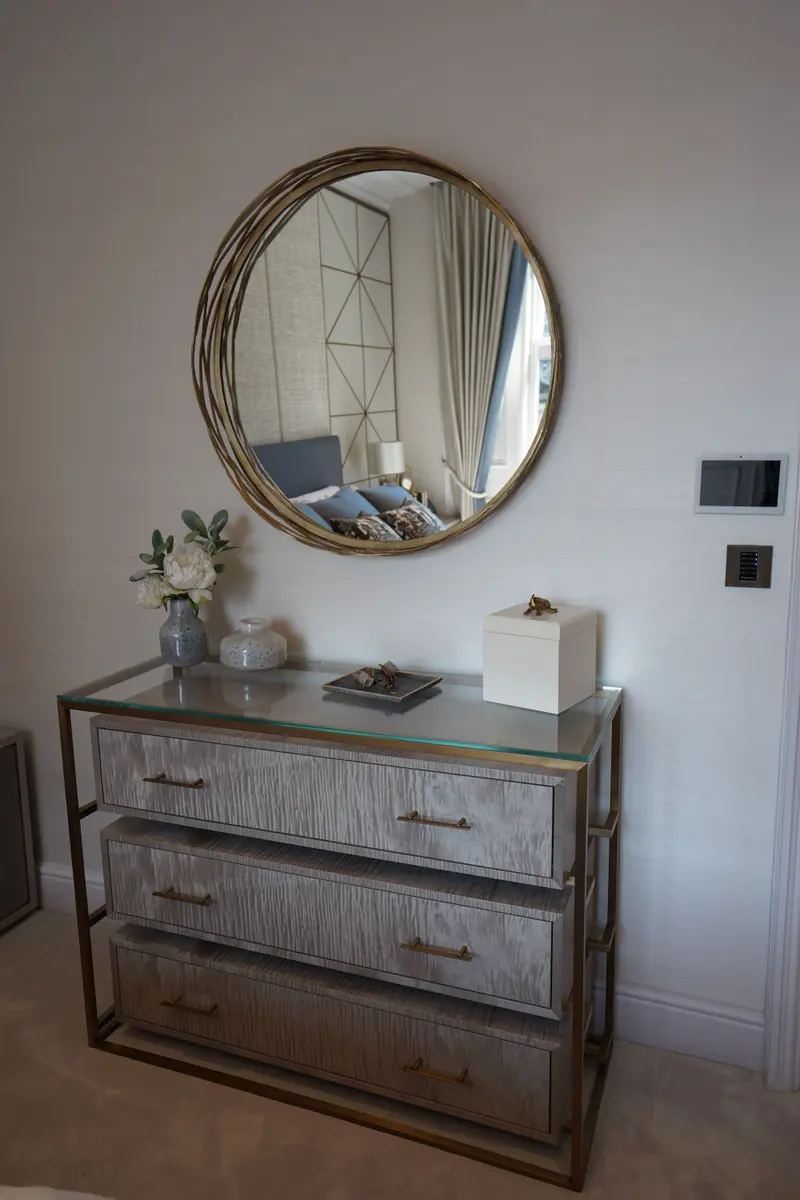
- Photographs: the finished arch first, then finished rooms and details in the same residence. We do not name the home or its owner, and window views and personal items are blurred.
The problem
An arch is the least forgiving edge in a room. The eye follows its curve from one spring point to the other, so any flat spot, kink or wander in the line shows at once, and wallcovering wrapped over the edge follows every one of them.
This arch was not true. The curve did not run evenly, and the plastered edge along it was not a clean, consistent line. Hanging the paper straight over it would have recorded those faults in the finish.
There was a second problem: durability. A bare paper edge on an external curve is fragile. It is the part of the wall most likely to be brushed by shoulders, bags, furniture and cleaning, and on a curve the paper is already working as it turns the corner. Left exposed, an edge like that scuffs, frays, wears through and, in time, lifts.
The solution
- Survey. Before anything was hung, we surveyed the arch: the line of the curve on each face, the condition of the edge, and where it departed from a true line. The survey decided the approach: a fixed, true edge for the paper to finish against, rather than a bare wrap that would show the faults.
- A specialist profile, ordered for the job. We ordered a specialist external-corner profile made for wallcoverings for this arch. Profiles of this kind are slim, flexible corner sections designed to sit at the arris and give the wallcovering a hard, consistent edge to meet.
- Bent to the arch. The profile was bent to the arch’s curve and set so that it describes one smooth line from spring point to spring point, rather than following the faults of the old edge.
- Fixed. The profile was fixed along its whole length, so it holds its line and does not move as the paper dries or the room settles.
- Scribed in. The wallcovering was then hung on each face and scribed into the trim’s return: cut to the line of the profile, so the edge of the paper is held and protected by the trim instead of sitting exposed on the corner.
The result
A crisp, durable, high-end edge. The arch reads as a single clean curve, the paper finishes to a precise line on both faces, and the most exposed edge in the room is protected by the profile rather than left to wear. The edge is designed to keep its line instead of scuffing and lifting.
The type of trim used
We do not name the exact product used on this arch. The profile was of the type shown in these two manufacturers’ examples, which are cited for the type of trim, not as the product installed here:
- Arte, Profilo corner guards. A corner guard for outside corners and arches, adjustable from 90° to 180°. The wallcovering is applied to the raised part of the guard and the surplus cut away, and the guard can be painted to match the wallcovering.
- Tarkett, ProtectWall flexible set-in corner. A flexible PVC outside corner, glued in place and installed under the wall covering, designed to follow uneven corners.
Which profile suits a given arch depends on the wallcovering, its thickness, the radius and the wear the edge will take. That is a decision for the survey, not for a catalogue.
When this detail is worth specifying
- Arches, curved reveals and rounded nibs where the edge is out of true and rebuilding it is not in the programme.
- Edges that take traffic: hallways, stair openings, hotel corridors and anywhere a shoulder or a trolley passes close.
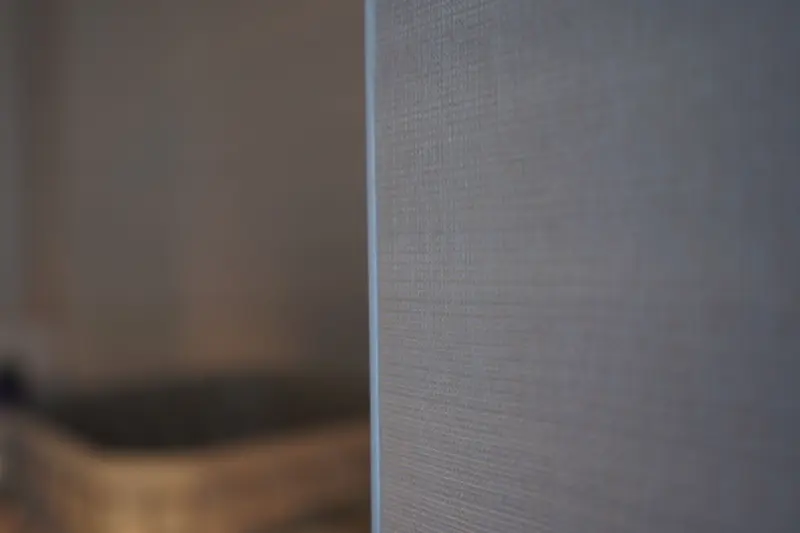
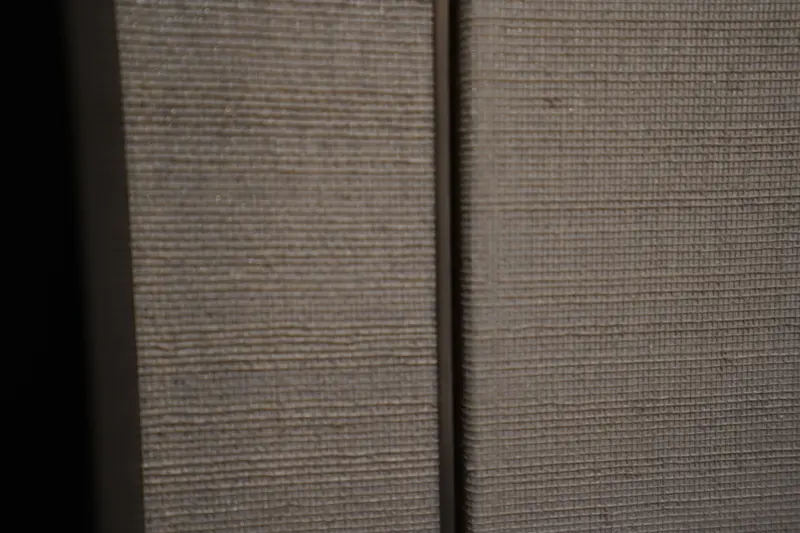
- Delicate or textured wallcoverings, such as natural weaves and silks, whose cut edge frays or wears quickly if left exposed.
Preparing the wall is the other half of a clean edge: our wall preparation guide covers what we check before anything is hung, and our guide to bubbles and lifting edges explains what to do if an edge does start to go. If you have an arch, a reveal or a curved corner in mind, send us photographs and the wallcovering reference and we will advise on the detail at survey.