Can wallcoverings be installed while the hotel stays open? Yes, and most of our hotel work has been in live buildings: Brown’s Hotel never stopped welcoming guests across a two-year decorating programme, and Raffles London at The OWO and the hotel at 15 Old Bailey were fitted out room by room. The specification has to answer four questions that a residential job does not: how the wall will be cleaned, how the rooms will be released, how every room will match the sample room, and what the building needs to keep for maintenance afterwards.
Which material suits a guest room, and which a corridor?
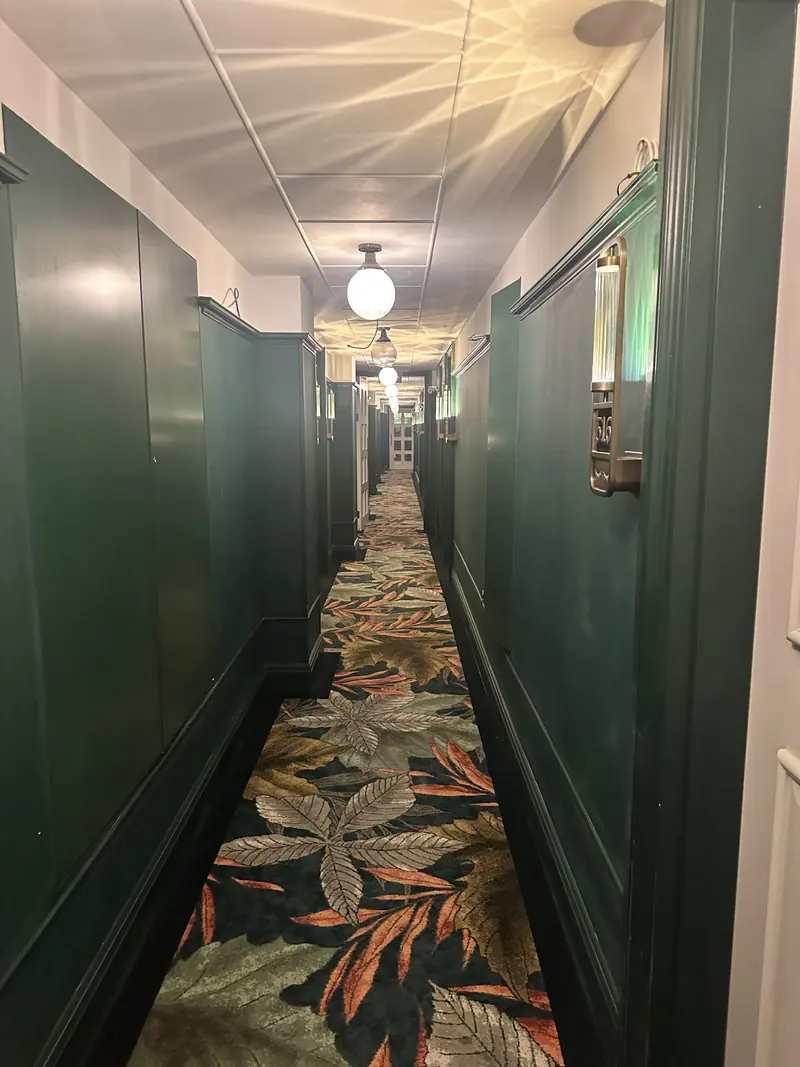
Corridors take luggage, trolleys and shoulders all day; guest rooms take chair backs and the occasional suitcase; reception and restaurant walls take hands and cleaning. Contract vinyl is the usual specification where wear and cleaning come first, and at The OWO the install was a bespoke Vescom wallcovering to walls and parts of the joinery. Natural weaves and textiles still have a place where the finish matters more than wipeability: Phillip Jeffries Tweed and Omexco at Four Seasons Ten Trinity Square, for instance. The decision is the room’s actual use, not the room’s name.
What does the cleaning regime need?
Agree the housekeeping method before the product is chosen, then confirm the exact product’s cleaning instructions match it. Contract vinyl will take a damp cloth and mild soap; it will not take abrasive creams, neat bleach or scourers. A textile wall needs a dry method. Hand a care sheet per product to housekeeping at handover, because “wallpaper” is too broad a category for one cleaning method. Our aftercare page gives the general care by family; the product’s own sheet takes precedence.
Why insist on a sample room?
A sample room settles appearance, seam position, the junction with joinery and skirting, and the cleaning test, before the same work is repeated across a floor. At 15 Old Bailey the programme ran from a sample room in November 2022 to final touches in August 2024, covering 111 guest rooms across seven storeys. Record who accepts the sample room and on what basis, and keep that acceptance with the project record. Everything that follows is measured against it.
How is batch and shading consistency kept across a floor?
Order each run of rooms from one batch, check the batch on every delivery against the measure, and allocate rolls to rooms before cutting so that no room mixes batches. With a bespoke production run, consistency from roll to roll and room to room is paramount; at The OWO, batches were checked and managed so that corridors of rooms read as one. Natural textiles vary more than vinyl, and shading on them was checked continuously at Four Seasons so the walls read as a single surface.
How is the work phased around guests?
Identify which rooms can be released together, the permitted working hours, the delivery routes and where material can be stored. Delivery of free-issue goods is timed to the hang; paper is not left in corridors. The work is contained, moves around the house’s bookings, and the area is left tidy each day, with a project leader on site every day and, on a longer commission, a forward plan agreed each week. Include guest-facing protection, noise limits and the daily handover expectations in the scope, not as a courtesy afterwards.
What documentation does the project need?
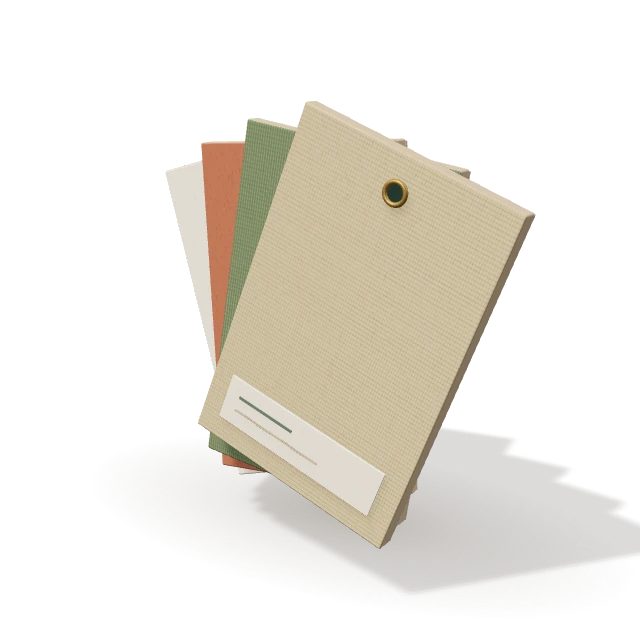
Where the project sets fire, acoustic or environmental requirements, obtain the current test or classification document for the exact product, backing and installation method proposed, and have it accepted before ordering. For fire, in building work, the designer, fire engineer or building-control body accepts it. Where the work is not building work, the hotel’s responsible person accepts it, through the fire risk assessment. Whoever set an acoustic or environmental requirement accepts that evidence. “Contract wallcovering” or “vinyl” on a sample card is not evidence of any classification, and neither is this guide. A classification belongs to the build-up that was tested, the wallcovering, adhesive and substrate together, so a substitute product or adhesive needs its own evidence. A guest room, a public corridor and a protected stair can carry different requirements; there is no single class that “hotels need”. Whether an older British classification satisfies a project is for the person who accepts it to decide, not the installer. The adhesive and primer are part of the specified system: for Vescom products, Vescom lists the correct ones per product on its adhesives and accessories page, and other makers’ instructions do the same for theirs.
What should the hotel keep after handover?
A room-by-room record of the installed product, colourway, batch and care sheet; spare material from the same batch, kept dry with its batch label and stored as the maker recommends; and a clear note of the limits of matching a later repair, since a patch from a different batch will show. Our problems and aftercare guide explains what to record when something goes wrong.
What this guide cannot tell you
It describes practice on London hotel refurbishments in occupied buildings. It does not certify any product. It does not replace the specifier’s review of fire, acoustic or wet-area requirements, or the responsible person’s fire risk assessment for a hotel in use. For a phased programme, send the room types, the floor or phase schedule, occupancy, working hours and the material codes; the hotels and operators page lists what to include, and the developer package guide covers the tender side where a main contractor is involved.